

Table of Contents
- Why a $12 Bottle of Hot Sauce Costs More Than a $3 One
- Premium Hot Sauce Ingredients: Where the Money Actually Goes
- Small-Batch Hot Sauce Production Costs Explained
- Packaging, Distribution, and Retail Markup: The Hidden Multipliers
- Cost Per Ounce: The Comparison That Actually Matters
- The Value vs. Luxury Spectrum: When Paying More Makes Sense
- Artisanal Hot Sauce Gift Sets: Why Presentation Adds to the Price
- Frequently Asked Questions
Last Updated: October 2, 2026
Why a $12 Bottle of Hot Sauce Costs More Than a $3 One
Walk down any grocery aisle and you'll see hot sauce priced from a couple of dollars to well over ten. The gap isn't random: a high hot sauce price reflects real differences in what goes into the bottle, how it's made, and how it reaches your table. This guide from Pepper Song breaks down where every dollar goes, so you can judge whether a bottle earns its price.

Premium Hot Sauce Ingredients: Where the Money Actually Goes
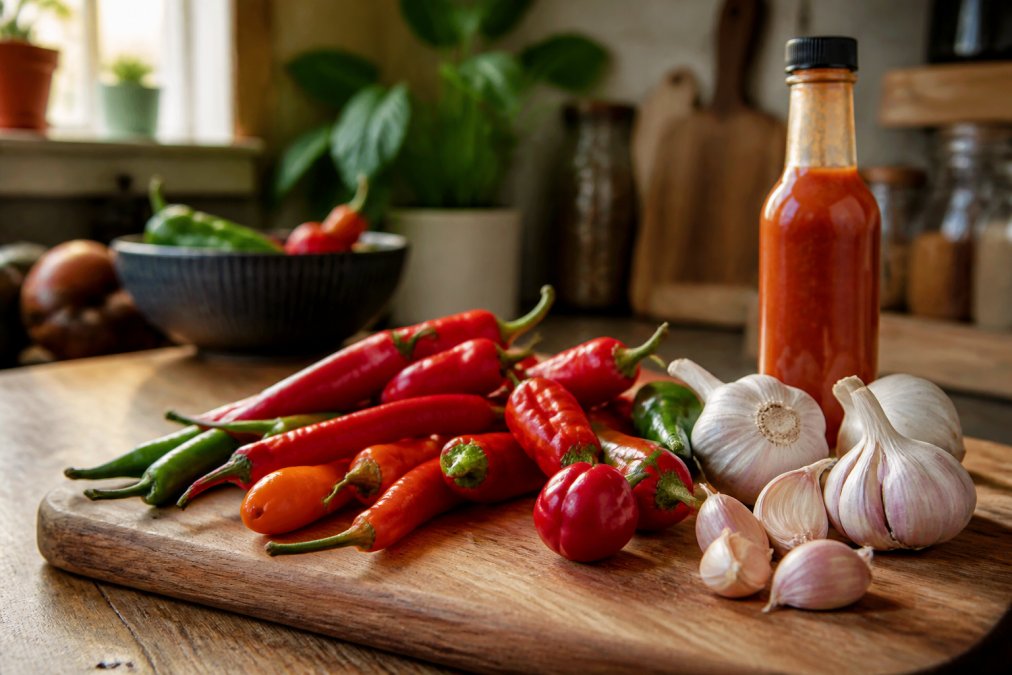
Ingredients are the single largest driver of a high hot sauce price. Premium hot sauce ingredients, from specific pepper varieties to fresh aromatics, cost more because they're grown in limited quantities and handled with care. A commodity pepper bought at auction prices very differently than a named varietal grown to order.
Pepper Sourcing and Crop Yield
Pepper sourcing and crop yield determine a large share of the final cost. When a grower commits acreage to a specific chili variety, the harvest is exposed to weather, pests, and timing, and a weak crop yield raises the per-pound cost for every maker buying that pepper. Adverse weather can tighten supply across the entire category. This is why makers who lock in long-term relationships with named farms, like Pepper Song's sourcing from Flat Tack Farm, pay more per pound but gain consistency commodity buyers can't match.
Fermented vs. Fresh Peppers: The Flavor Complexity Trade-Off
Fermentation adds both time and labor, and that shows up in the price. A fresh-pepper sauce can be cooked and bottled in a day; a fermented sauce sits for weeks while cultures develop flavor complexity, tying up tank space and requiring monitoring. That layered, savory depth is often what separates a $3 bottle from a $12 one.

Small-Batch Hot Sauce Production Costs Explained
Small-batch hot sauce production costs are dominated by labor and overhead, not ingredients. When you make a few hundred bottles at a time instead of hundreds of thousands, every unit carries a larger share of the fixed costs: kitchen, equipment, staff time, and compliance work.

Labor, Production Overhead, and Food Safety Compliance
A common mistake is assuming a small maker's costs scale down proportionally with volume. They don't. Overhead such as commercial kitchen time, equipment cleaning, and batch testing stays roughly fixed whether you're making 200 bottles or 2,000, so the per-bottle burden is far higher at low volume. Labor is the biggest line item: chopping, cooking, blending, and bottling by hand takes hours a factory automates away.
Packaging, Distribution, and Retail Markup: The Hidden Multipliers
Packaging and distribution quietly multiply the cost of every bottle. Glass, closures, labels, and shipping are often overlooked, yet they can rival ingredient cost for a small producer. The woozy bottle many craft sauces use, a squat glass shape harder to source in small runs, costs more per unit than a standard mass-produced container.
Cost Per Ounce: The Comparison That Actually Matters
Cost per ounce is the comparison that actually matters, not the sticker price. A larger bottle at a higher price can be cheaper per ounce than a small bottle at a low price. But the division alone doesn't tell you why one bottle costs more per ounce, for that, you need to see where the money goes inside the bottle.
| Bottle Size | Price | Cost Per Ounce | What It Tells You |
|---|---|---|---|
| 5 oz mass-market | $3 | $0.60 | Cheap per ounce, thin flavor |
| 5 oz craft, single | $12 | $2.40 | Higher unit price, layered flavor |
| 5 oz craft, in a bundle | $11 | $2.20 | Bundle lowers unit price |
| 5 oz craft, gift set | $13 | $2.60 | Presentation adds cost |
A Dollar-by-Dollar Breakdown of a Craft Bottle
A craft maker's per-bottle cost roughly splits into four buckets. Percentages shift by recipe and batch size, but the pattern is consistent:
- Ingredients (peppers, vinegar, aromatics, salt): the most visible line, and the one most shoppers assume dominates. For a fermented sauce using a named varietal, ingredient cost per 5 oz bottle commonly runs several times that of a commodity-pepper sauce.
- Packaging (glass, cap, shrink band, label): the woozy bottle, custom label, and small-run glass order often rival or exceed the ingredient line for a producer bottling a few hundred units at a time.
- Labor and overhead (kitchen time, monitoring, hand-filling, cleaning, testing): the largest bucket at low volume, because these costs don't shrink when batch size does.
- Distribution and margin (shipping, wholesale discount, retail markup): the layer that turns a maker's wholesale price into a shelf price.
Why the Same Sauce Costs Different Amounts Per Ounce
The per-ounce number also moves depending on where you buy, not just what you buy. The same 5 oz bottle can carry three different per-ounce costs:
- Direct from the maker: you pay the maker's price plus shipping, with no retail markup layered on.
- Specialty shop or grocer: the retailer's markup is added, which is why the same bottle often costs noticeably more on a shelf than on a maker's own site.
- Bundle or multi-pack: the per-bottle cost drops because packaging, shipping, and handling are shared across units.
The Value vs. Luxury Spectrum: When Paying More Makes Sense
The value vs. luxury spectrum is where most buying decisions happen. Not every expensive bottle is worth it, and not every cheap one is a bargain. The logic is consistent: you're paying for flavor, ingredients, and craft, or you're paying for a label. The useful question isn't "is this expensive?", it's "which side of the line is this bottle on?"
Where a Condiment Becomes a Luxury Item
There's no official threshold, but a working definition helps. A hot sauce behaves like a condiment when it's bought to be used up, poured on eggs, tacos, and wings until empty, then replaced. It behaves like a luxury item when it's bought to be savored, gifted, or displayed, used sparingly, sometimes never opened, and judged against other gifts rather than other condiments.
The practical markers of the luxury side:
- Named, single-origin, or rare pepper varieties instead of a generic pepper blend.
- A fermented base rather than a quick-cooked vinegar-and-pepper mix.
- Small-batch production with hand-filling and hand-labeling.
- Presentation packaging, a box, a card, a curated set.
- A sourcing story the maker can name (a specific farm, a specific grower).
The DIY Cost Analysis: What You Actually Pay for Convenience
One way to test whether a high price is justified is to price out making the sauce yourself. The comparison isn't close once you count everything:
- Peppers: a named varietal or a rare hot pepper often costs more per pound at retail than commodity peppers, and you may need to buy more than the recipe calls for to get the ripeness you want.
- Aromatics and acid: garlic, onion, fruit, vinegar, and salt are cheap individually but add up across a recipe.
- Equipment: a blender, fermentation vessels, bottles, caps, and labels are one-time costs that only pay off if you make sauce repeatedly.
- Time: fermentation alone can take weeks of waiting and monitoring. Cooking, blending, and bottling add hours on top.
- Spoilage and failure: home batches sometimes go wrong, mold, off-flavors, broken seals, and that cost is real even though it doesn't show up on a receipt.
How to Decide Which Side You're On
Match the bottle to the job:
- Daily cooking, high volume: a flavor-forward craft sauce that works across eggs, tacos, and wings earns its place, and the per-ounce premium is small relative to how often you use it.
- Pure heat, no interest in flavor: a commodity bottle does the job at a lower per-ounce cost.
- Gifting or display: judge the bottle against other gifts, not against other condiments, presentation and variety are part of what you're buying.
Sustainability and ethical sourcing premiums sit at the luxury end. Some makers pay more for responsibly grown peppers and minimal packaging, and that cost is passed along, a legitimate reason to pay more, but a choice, not a requirement. Pepper Song keeps packaging minimal unless you add a gift box, keeping the focus on the sauce rather than the wrapping.
Artisanal Hot Sauce Gift Sets: Why Presentation Adds to the Price
For everyday cooking, a single bottle of It's A Doozy Hot Sauce shows what a high hot sauce price buys: Carolina Reaper heat with real fruit character, no added sugar, and a long finish that holds up on wings, chili, and ramen.
Frequently Asked Questions
What ingredients drive up the cost of artisanal hot sauce?
Specialty peppers like Carolina Reapers or habaneros cost significantly more than commodity varieties, especially when sourced from small farms with limited crop yields. Fermentation adds time and facility costs. Premium vinegars, fresh garlic, and real fruit purees replace cheap fillers. When a brand skips added sugars, preservatives, and artificial colors, it relies on higher-quality base ingredients to achieve shelf stability and flavor complexity. Each of these choices raises the cost of goods sold before the bottle is even filled.
How does small-batch hot sauce production affect the retail price?
Small-batch production means less automation, more hands-on labor, and higher per-unit overhead. A mass manufacturer might produce 50,000 bottles in a single run, spreading fixed costs across every unit. A craft producer making 500 bottles absorbs the same facility, food safety compliance, and labeling requirements across far fewer units. Labor-intensive steps like hand-peeling peppers, monitoring fermentation, and small-run bottling all add to the final price. That gap in production efficiency is one of the biggest reasons a craft bottle costs more.
Is a higher-priced hot sauce actually better than a grocery store brand?
It depends on what you value. A $3 grocery store bottle is designed for mass appeal, consistent mild heat, and long shelf life, often using vinegar as the dominant flavor with added sugar to round it out. A $10-$14 craft bottle typically delivers layered flavor, real pepper character, and a heat level that complements food rather than overwhelming it. If you use hot sauce daily and care about flavor complexity, the higher price buys a noticeably different experience. If you just want generic heat, the cheaper option works fine.
Why do premium hot sauce brands avoid added sugars and fillers?
Added sugars and fillers like corn syrup or modified starch are cheap ways to bulk up a sauce and mask inferior ingredients. Brands that skip them are making a deliberate choice to let the peppers carry the flavor. This matters for health-conscious consumers managing dietary restrictions, including gestational diabetes, who need condiments with zero added sugar. It also matters for flavor: without sugar to hide behind, every ingredient has to earn its place. That standard raises costs but produces a cleaner, more complex sauce.
The challenge with hot sauce pricing is that the label rarely tells you where the money went. You have to look at sourcing, batch size, and craft to know whether a bottle earns its price. Pepper Song makes that easy: small-batch production, premium peppers sourced from Flat Tack Farm, no added sugar, and music-inspired flavor profiles that put taste before heat. Get started with Pepper Song and taste the difference a thoughtfully priced bottle makes.
0 comments