

Table of Contents
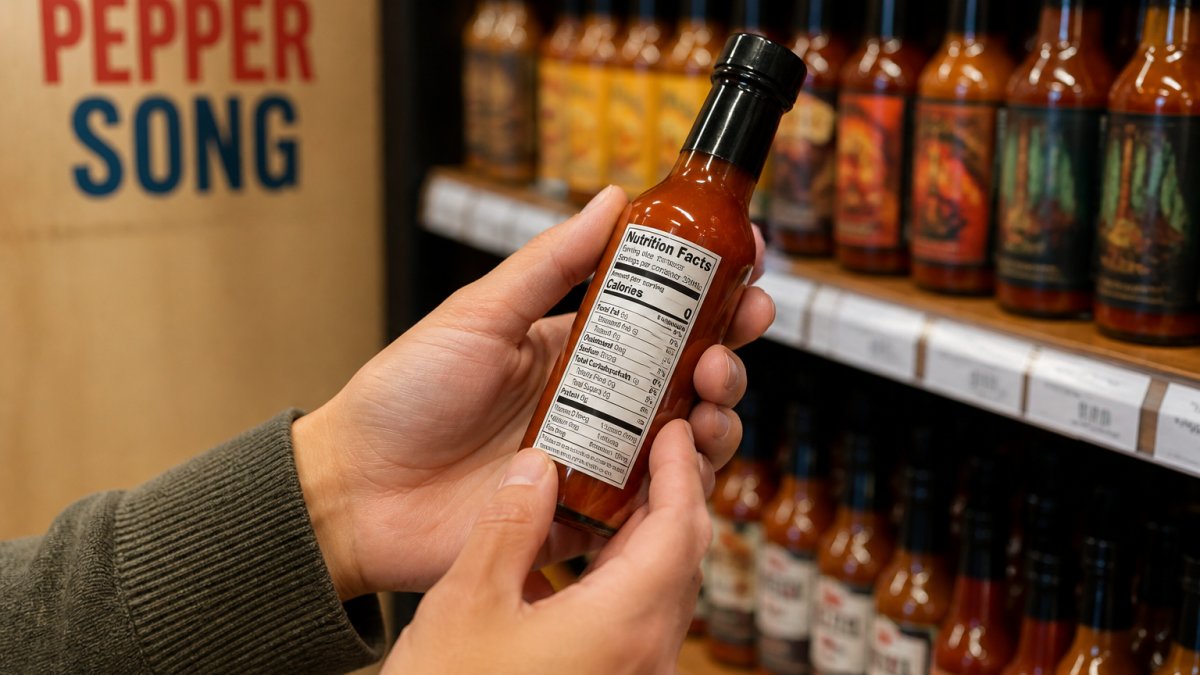
- Start With the Nutrition Facts Panel, Not the Front Label
- Sugar-Free vs. No Added Sugar: The Distinction That Trips Up Shoppers
- Hot Sauce Ingredients to Avoid for Sugar (and Their Sneaky Aliases)
- Low-Carb Hot Sauce for Keto: What Fits and What Doesn't
- Compare by Sauce Style: Vinegar-Based vs. Sweetened vs. Fermented
- How to Verify a Sugar-Free Hot Sauce Before You Buy
- Conclusion: Build a Label-Reading Habit That Sticks
- Frequently Asked Questions
Last Updated: October 5, 2026
Start With the Nutrition Facts Panel, Not the Front Label
Learning how to find sugar free hot sauce starts with a simple habit: flip the bottle over. The front label is marketing. The Nutrition Facts panel is regulated, standardized, and much harder to fudge.
At Pepper Song, we built our entire lineup around this idea. Every sauce we make carries no added sugar, and we list exactly what goes into the bottle: vinegar, peppers, water, onion, garlic, carrots, pineapple, salt. Nothing hidden.

Here is the fastest way to screen a bottle in the store:
- Turn the bottle around and find the Nutrition Facts panel
- Check the "Total Sugars" line first
- Then scan "Added Sugars" directly beneath it
- Only after that, read the ingredient list
That order matters. Most shoppers do it backwards.
Total Sugars vs. Added Sugars: What the Numbers Actually Mean
Total Sugars includes everything: sugars naturally present in peppers, carrots, or fruit, plus anything a producer stirred in. Added Sugars covers only what was introduced during manufacturing.
A sauce made with carrots and pineapple will show a small Total Sugars number even with zero added sugar. That is normal and not a red flag. The line that matters most for your goal is Added Sugars. If it reads 0g, nothing sweet was added.
Serving Size Math: Why 1 Teaspoon Can Hide 2 Grams
Serving size is where labels get sneaky. A "serving" of hot sauce is typically 1 teaspoon, and many people use three or four times that on a plate of wings.
Do the math before you buy. If a label shows 2g of added sugar per teaspoon, a realistic pour of four teaspoons lands you at 8g. That is roughly two sugar cubes on your dinner.
Sugar-Free vs. No Added Sugar: The Distinction That Trips Up Shoppers
These two phrases are not interchangeable, and treating them as synonyms is the most common mistake shoppers make. Sugar-free is a regulated nutrient content claim with a strict per-serving threshold. No added sugar is a separate claim about what went into the bottle, not what the finished product contains. A sauce can qualify for one, both, or neither.
What Each Claim Actually Requires
The FDA guidance on nutrient content claims sets the rules. A product labeled "sugar-free" must contain less than 0.5 grams of sugar per serving (the FDA).
That difference matters because of how the two claims interact with real portions:
- A sauce with 0g added sugar but 1g total sugar per teaspoon is "no added sugar" but not "sugar-free."
- A sauce with 0.4g total sugar per teaspoon can legally say "sugar-free" even though sugar is present.
- A sauce with 0g total sugar and 0g added sugar satisfies both claims.
For most people managing carbs or blood sugar, "no added sugar" is the more useful claim to hunt for, because it tells you the producer did not spike the bottle.
The Serving-Size Trap Behind Both Claims
Both claims are measured per serving, and a serving of hot sauce is typically 1 teaspoon. If you pour four teaspoons over a plate of wings, you have consumed four servings.
This is why the claim alone is never enough. The number on the panel is real, but it describes a portion most people exceed.
Neither Claim Addresses Sweeteners
"Sugar-free" says nothing about sugar alcohols, stevia, monk fruit, or synthetic sweeteners. A bottle can be sugar-free and still taste sweet because a non-sugar sweetener was added. If your goal is a savory sauce rather than a sweet one, the ingredient list, not the claim, is where you confirm that.
A Quick Decision Rule
If you are choosing between two bottles and only have time for one check, look at Added Sugars first. If it reads 0g, move to the ingredient list and scan for sweetener aliases. If both checks pass, the bottle fits a low-sugar approach regardless of which claim is printed on the front.
Hot Sauce Ingredients to Avoid for Sugar (and Their Sneaky Aliases)
Sugar rarely announces itself as "sugar" on a hot sauce label. It hides behind at least a dozen names, and manufacturers know most shoppers will not recognize them. The list below is grouped by what the alias actually is, so you can spot a new one even if it is not written here.
Syrups and Liquid Sweeteners
These are the most common added sweeteners in sauces marketed as spicy or savory:
- High fructose corn syrup
- Corn syrup
- Cane syrup
- Rice syrup and brown rice syrup
- Agave nectar
- Molasses
- Honey
- Maple syrup
Any of these in the first five ingredients means the bottle is sweetened as a major component, not a trace.
Concentrates and Juices
Fruit-based sweeteners are easy to miss because they sound natural:
- Fruit juice concentrate (apple, pear, white grape, and pineapple are common)
- Evaporated cane juice
- Fruit puree added as a sweetener rather than a flavor base
A sauce built on real peppers and vinegar may include a small amount of fruit for balance. A sauce where fruit concentrate appears before the peppers is a sweetened product wearing a spicy label.
Dry Sugars and Starches
These appear in powdered form and often hide in the middle of an ingredient list:
- Dextrose
- Maltose
- Maltodextrin
- Sucrose
- Cane sugar, brown sugar, and turbinado sugar
- Coconut sugar and date sugar
Maltodextrin is worth flagging on its own: it is a starch-derived thickener that carries carbohydrate without tasting sweet, so it can appear in a sauce that does not read as sugary at all.
Sugar Alcohols and Non-Sugar Sweeteners
These do not count as added sugar on the panel, but they still signal a sweetened product:
- Erythritol, xylitol, sorbitol, and maltitol
- Stevia and stevia leaf extract
- Monk fruit extract
- Sucralose, aspartame, and saccharin
If your goal is a savory sauce, any of these in the list is a sign the producer was chasing sweetness.
Reading the Ingredient List in Order: A 4-Step Check
Ingredients are listed by weight, heaviest first. That single fact powers this whole method.
- Count the total ingredients. Short lists are usually cleaner. A four-ingredient sauce of peppers, vinegar, garlic, and salt has nowhere to hide a sweetener.
- Scan the first five. If a sweetener appears there, it is a major component, not a trace.
- Hunt the aliases. Check every name against the four groups above, not just the first list.
- Look for vinegar position. In a traditional sauce, vinegar or peppers should lead. If water or a syrup leads, you are holding a diluted or sweetened product.
What to Do When You Find a New Alias
Labels change and new sweetener names appear regularly. When you hit an ingredient you do not recognize, search the name plus "added sugar" before you buy. If the search returns a sweetener classification, treat the bottle as sweetened. If it returns a pepper, a spice, or a preservative, it is safe to keep reading.
A Note on "Natural Flavors"
"Natural flavors" is a legal catch-all that can include sweetener-derived compounds. It is not proof of added sugar, but it is also not proof of its absence. When a bottle lists natural flavors and you cannot verify the recipe elsewhere, treat the sugar content as unknown rather than zero.
Low-Carb Hot Sauce for Keto: What Fits and What Doesn't
Low-carb hot sauce for keto comes down to one number: net carbs per serving.
Vinegar-based sauces built on peppers, salt, and garlic typically land near zero net carbs.
A practical rule for keto: if Added Sugars reads 0g and no sweetener appears in the ingredient list, the sauce almost certainly fits.
Our Habanero Carrot blends fresh habaneros with carrots and pineapple, so it carries natural sugars from real produce, never from an added sweetener.

Compare by Sauce Style: Vinegar-Based vs. Sweetened vs. Fermented
Sauce style predicts sugar content better than any front-label claim. Here is how the three main families stack up.
| Style | Typical Base | Sugar Risk | Best For |
|---|---|---|---|
| Vinegar-based | Vinegar, peppers, salt | Low | Everyday table use, wings, eggs |
| Sweetened | Fruit puree, syrup, honey | High | Dipping, glazes, sweet-heat fans |
| Fermented | Salted peppers, brine | Low | Complex flavor, tacos, marinades |
Vinegar-based sauces dominate the sugar-free category because acid does the work sugar would otherwise do. Sweetened sauces are the ones to inspect hardest.
If your goal is a bottle you can use daily without thinking about carbs, vinegar-based is the safest bet.
How to Verify a Sugar-Free Hot Sauce Before You Buy
Verification takes about thirty seconds once you know where to look.
- Check the panel: Added Sugars at 0g
- Check the list: no sweetener aliases in any position
- Check the order: peppers or vinegar first, not water or syrup
- Check the claim: "no added sugar" beats a vague "natural" on the front
- Check the maker: small-batch producers often publish full ingredient lists online
That last step is the one most shoppers skip. A producer confident in their recipe will list every ingredient on their product page.
For reference, the USDA FoodData Central database lets you look up nutrition data for raw peppers and other base ingredients, which helps you sanity-check whether a sauce's numbers make sense.
Conclusion: Build a Label-Reading Habit That Sticks
Reading labels gets faster with repetition. After a dozen bottles, you will spot a sweetener alias in two seconds and know whether a sauce belongs in your cart.
If you would rather skip the guesswork, our lineup is built to make the decision easy. The Jalapeño Green brings a mild, tangy kick that works on eggs and tacos, while the Anytime Red delivers warm heat and a whisper of smoke for roasted meats and pizza.

Add a bottle to your next order and taste what a clean ingredient list actually delivers.
Frequently Asked Questions
Which hot sauce has no sugar?
Look for sauces whose ingredient list contains only peppers, vinegar, salt, garlic, and similar whole foods, with no sweeteners of any kind. Check the Nutrition Facts panel for 0g total sugars and 0g added sugars per serving. Pepper Song's lineup, including Anytime Red and Jalapeño Green, lists no added sugars and uses ingredients like peppers, vinegar, garlic, and salt.
How can you tell if hot sauce has added sugar?
Read the ingredient list, not just the front label. Added sugars hide under names like cane sugar, honey, agave nectar, corn syrup, molasses, fruit juice concentrate, and brown rice syrup. Then confirm on the Nutrition Facts panel: any number above 0g under Added Sugars means the bottle contains sweetener. If the front says 'no added sugar' but the panel shows added sugars, trust the panel.
Does hot sauce fit a keto diet?
Vinegar-based hot sauces typically fit keto because they contain almost no carbohydrates per serving. A sauce with 0g total sugars and 0g added sugars contributes nothing meaningful to your daily carb limit. Avoid sweetened styles like sweet chili, hot honey, and mango-based sauces, which can carry several grams of sugar per teaspoon. Always check the serving size, since keto carb budgets are tight.
What ingredients should you look for in a low-sugar hot sauce?
Prioritize short ingredient lists built on chili peppers, vinegar, salt, garlic, and onion. These whole-food ingredients deliver flavor without sugar. Watch for fruit purees, syrups, and juice concentrates, which add sugar even when the label sounds natural. Pepper Song's Jalapeño Green uses just peppers, vinegar, garlic, and salt, a good template for what a clean, low-sugar label looks like.
0 comments