

Table of Contents
- Why Sugar-Free Flavor Building Changes How Food Tastes
- Natural Flavor Enhancers for Cooking: Your Sugar-Free Toolkit
- How to Use Spices for Flavor: Layering, Blooming, and Blending
- Aromatics, Alliums, and the Maillard Reaction: Building a Seasoning Base
- The Benefits of Sugar-Free Hot Sauce in Everyday Cooking
-
How to Add Flavor Without Sugar: A Step-by-Step Cooking Method
- What You'll Need
- Step 1: Salt Early [Time: 1 minute]
- Step 2: Build Your Aromatic Base [Time: 3-5 minutes]
- Step 3: Bloom Your Spices [Time: 1 minute]
- Step 4: Add Umami [Time: 2 minutes]
- Step 5: Deglaze [Time: 1 minute]
- Step 6: Finish With Acid and Heat [Time: 30 seconds]
- Common Mistakes That Flatten Sugar-Free Cooking
- Frequently Asked Questions
Last Updated: September 21, 2026
Why Sugar-Free Flavor Building Changes How Food Tastes
Sugar masks bitterness, rounds out acidity, and adds body. Take it away and every other flavor has nowhere to hide.
The Science of Flavor Perception and Palate Fatigue
Flavor is taste plus smell, texture, and temperature, all combined by your brain.
Natural Flavor Enhancers for Cooking: Your Sugar-Free Toolkit
Natural flavor enhancers for cooking boost taste without adding sweetness, acidity, savoriness, aroma, or heat. Think of them as your new pantry backbone:
- Acids: lemon, lime, vinegar, yogurt
- Aromatics: onion, garlic, ginger, scallion
- Spices: cumin, paprika, coriander, chili
- Umami sources: mushrooms, tomato paste, soy sauce, fish sauce
- Fresh herbs: cilantro, basil, parsley, mint
- Heat: chili flakes, fresh chilies, hot sauce
Acids, Zest, and Vinegars That Brighten Without Sweetness
If you only make one change, add acid at the end of cooking. Acidity wakes up dull food, cuts through fat, and makes flavors pop in a way sugar never could.
- Lemon and lime juice: finish soups, fish, grains, and salads
- Citrus zest: grate it into marinades, dressings, and rubs for a bright, floral hit
- Apple cider vinegar: great for slaws, beans, and braises
- Rice vinegar: milder, perfect for Asian-style dishes
- Balsamic vinegar: a few drops finish roasted vegetables beautifully
- Red wine vinegar: sharp and bold, ideal for pan sauces
How to Use Spices for Flavor: Layering, Blooming, and Blending
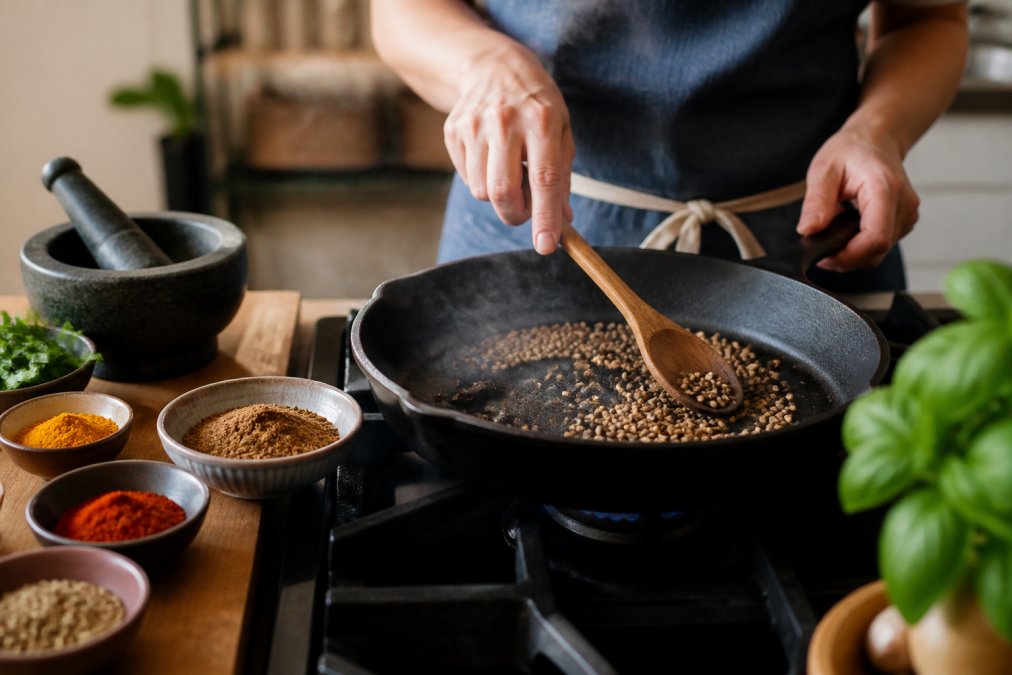
Learning how to use spices for flavor comes down to three techniques: layering, blooming, and blending. What most guides skip is which spice goes with which food, and how your equipment changes what a spice can do.
A Flavor Pairing Chart You Can Actually Use
Match the spice to the food, then adjust the amount to taste.
| Spice | Pairs With | Best Method |
|---|---|---|
| Smoked paprika | Eggs, chicken, potatoes, beans | Bloom in oil |
| Ground cumin | Beef, lamb, black beans, cauliflower | Bloom in oil |
| Coriander | Fish, carrots, lentils, pork | Toast whole, grind fresh |
| Chili powder | Chili, tacos, roasted squash | Layer start and finish |
| Cinnamon | Oats, coffee, lamb, carrots | Add late, off heat |
| Oregano | Tomato, chicken, zucchini | Add mid-cook |
| Turmeric | Rice, chickpeas, eggs | Bloom with black pepper |
| Ginger | Stir-fries, fish, squash | Fresh grated at the end |
A simple starter blend:
- 2 parts smoked paprika
- 1 part ground cumin
- 1 part garlic powder
- 1/2 part cayenne
- 1/2 part black pepper
Use it on eggs, chicken, roasted vegetables, or beans.
How Your Equipment Changes Spice Flavor
Different cooking tools extract flavor in different ways.
- Air fryer: High heat and fast air circulation brown spices quickly. Add spices before cooking, but expect them to taste more toasted than the same spice in a skillet.
- Slow cooker: Low, moist heat mutes volatile oils. Add whole spices or a spice bundle at the start, then refresh with a pinch of ground spice in the last 30 minutes.
- Smoker: Smoke compounds cling to fat and protein. Use a dry rub with paprika, cumin, and black pepper, and skip sugar-based rubs entirely.
- Cast iron skillet: Retains heat and drives the Maillard reaction. Best tool for blooming whole spices before adding vegetables or meat.
- Pressure cooker: Traps aromatics. Use less spice than you would on the stovetop, then finish with fresh herbs or acid.
Aromatics, Alliums, and the Maillard Reaction: Building a Seasoning Base
Aromatics are the base layer of almost every savory dish. Onion, garlic, shallot, ginger, and scallion are alliums, and they build the foundation everything else sits on. Start most dishes by cooking chopped onion in oil over medium heat until soft and golden; add garlic last, since it burns fast.
More ways to build that base:
- Sauté mushrooms until deeply browned for umami
- Caramelize onions slowly for natural sweetness
- Roast tomatoes or peppers before blending into sauces
- Deglaze the pan with vinegar or broth to lift up browned bits
The Benefits of Sugar-Free Hot Sauce in Everyday Cooking
Hot sauce earns its place in a sugar-free kitchen because it delivers acid, salt, and heat in a single dash, exactly what flat food is missing. Many bottled sauces rely on sugar or corn syrup to round out the burn; a sugar-free sauce earns its balance through real ingredients, usually more vinegar, more fermented chili, and longer aging.
How to Read a Hot Sauce Label
The ingredient list tells you more than the front label ever will.
- First ingredient should be chilies or vinegar. If sugar, agave, or fruit concentrate appears in the first three, it is a sweet sauce with heat, not a flavor builder.
- Watch for hidden names. Cane sugar, dextrose, maltodextrin, corn syrup solids, and fruit juice concentrate all count as added sugar.
- Check the serving size. A "zero sugar" claim often means less than 0.5 grams per serving, not zero in the bottle.
- Look for real chilies. "Chili powder" or "natural flavor" can hide a lot. Named peppers like habanero, jalapeño, or ghost pepper tell you what you are actually tasting.
- Skip artificial thickeners. Xanthan gum and modified food starch are common, but a sauce built on fermentation does not need them.
Matching Heat Level to the Dish
Not every sauce belongs on every plate:
- Mild (under 2,500 Scoville): Eggs, soups, grain bowls. Use as a finishing acid.
- Medium (2,500 to 15,000 Scoville): Tacos, chili, roasted vegetables. Use as a seasoning during cooking.
- Hot (15,000 to 50,000 Scoville): Marinades, wings, grilled meat. Use sparingly and balance with fat.
- Very hot (above 50,000 Scoville): A few drops in a large pot. Treat it like an extract, not a condiment.
Dietary Notes for Specific Needs
If you are cooking for a specific condition, a few adjustments matter:
- GERD or acid reflux: Vinegar-forward sauces can trigger symptoms. Choose a fermented chili sauce with lower acidity, and use it as a finishing drizzle rather than a cooking base.
- Low-histamine diets: Fermented foods are typically avoided. A fresh chili sauce made without fermentation is the safer choice.
- Diabetes management: Check total carbohydrates, not just sugar. Some fruit-based sauces carry more carbs than the label suggests.
- Low-sodium diets: Hot sauce is often high in salt. Compare brands and look for options under 100 mg sodium per teaspoon.
Use hot sauce like a seasoning, not just a topping:
- Stir a dash into eggs before scrambling
- Add a spoonful to soups and chili
- Mix into marinades and rubs
- Finish roasted vegetables with a few drops
How to Add Flavor Without Sugar: A Step-by-Step Cooking Method
Here is a repeatable method for how to add flavor without sugar in any dish.
What You'll Need
- Salt
- An acid (citrus, vinegar, or both)
- Aromatics (onion, garlic, ginger)
- Ground spices
- A source of umami
- A sugar-free hot sauce
Step 1: Salt Early [Time: 1 minute]
Salt at the start of cooking, not just at the end. Salt changes how your tongue reads every other flavor.
Step 2: Build Your Aromatic Base [Time: 3-5 minutes]
Cook onion, then garlic, in oil over medium heat until soft and golden.
Step 3: Bloom Your Spices [Time: 1 minute]
Add ground spices to the hot oil and stir until fragrant, without burning them.
Step 4: Add Umami [Time: 2 minutes]
Stir in tomato paste, mushrooms, or a splash of soy sauce. This makes the dish taste fuller.
Step 5: Deglaze [Time: 1 minute]
Pour in vinegar or broth and scrape up the browned bits.
Step 6: Finish With Acid and Heat [Time: 30 seconds]
Off the heat, add citrus juice, zest, or sugar-free hot sauce.
Expected Result: A dish that tastes bright, deep, and balanced, with no added sugar.
Common Mistakes That Flatten Sugar-Free Cooking
- Skipping salt. Under-salted food tastes flat no matter what else you add.
- Adding acid too early. Heat mutes brightness, so finish with citrus at the end.
- Burning your spices. Thirty seconds of blooming is enough. Burnt spices turn bitter.
- Using only one note. A dish needs salt, acid, aroma, and heat together.
- Forgetting texture. A crunchy topping like toasted seeds or fresh herbs changes how you taste the whole dish.
- Trusting the bottle. Always check labels for hidden sugar.
Most home cooks reach for sugar when a dish tastes flat. The real fix is usually salt, acid, or a deeper savory base.
Frequently Asked Questions
How do I balance heat and acidity in cooking without sugar?
Pair capsaicin-rich ingredients with acid rather than sweetness. A squeeze of citrus, a splash of vinegar, or a spoonful of sugar-free hot sauce adds brightness that rounds out heat. Fat from olive oil or butter also softens pungency. Taste as you go: add acid in small amounts until the heat feels rounded rather than sharp. This is the same balancing act sugar once performed, just without the sweetness.
Can hot sauce be a healthy way to add flavor without sugar?
Yes, if you check the label. Many commercial hot sauces hide sugar, corn syrup, or fruit concentrate. A sugar-free hot sauce built on peppers, vinegar, and spices adds flavor without spiking blood glucose, which matters for people managing gestational diabetes or other dietary restrictions. It also delivers capsaicin and vinegar, both of which bring acidity and heat that reduce the need for salt or sweetener.
What are the best natural flavor enhancers for cooking when I can't use sugar?
Start with aromatics like onion, garlic, and shallots, then layer acids such as lemon zest, lime juice, and vinegars. Umami-rich ingredients like mushrooms, tomato paste, and fermented sauces add depth. Toasted dried herbs, freshly cracked spices, and a sugar-free hot sauce round out the seasoning base. Combining two or three of these in one dish creates complexity that sugar alone never could.
How do I use spices for flavor without making food taste bitter or flat?
Bloom ground spices in oil over medium heat for 30 to 60 seconds before adding liquid. This releases fat-soluble compounds and prevents the raw, dusty taste that makes dishes feel flat. Add dried herbs earlier in cooking and fresh herbs at the end. Layer spices in stages rather than dumping them all at once, and taste between additions so the flavor profile stays balanced.
0 comments